Case Sharing: FATP Visual Inspection Solution for Electronics Manufacturing

2025 / 05 / 04

Background and Customer Needs

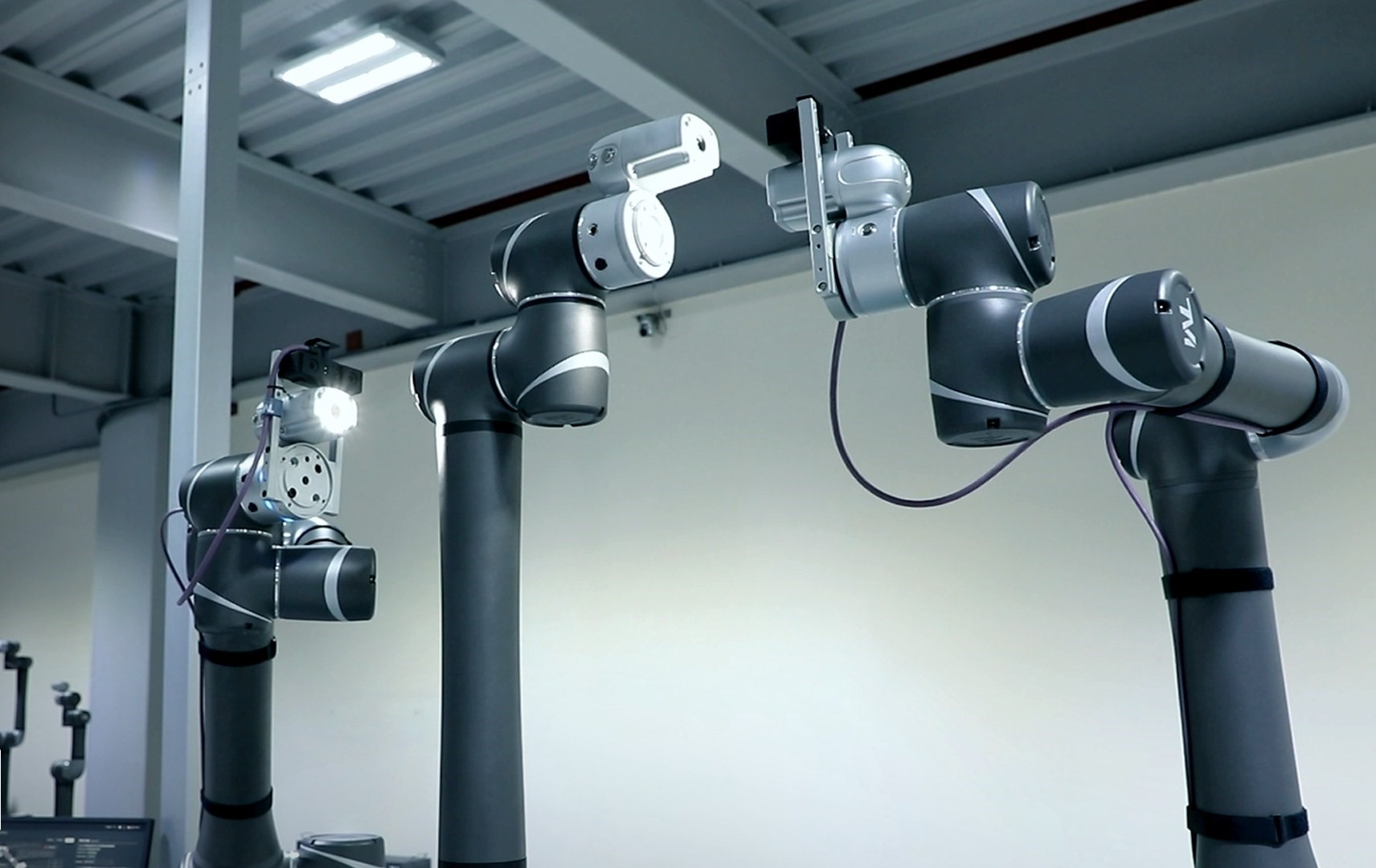
The customer in this case is a large electronics manufacturing services (EMS) provider. Their primary requirement is to leverage AI-trained models to perform high-precision, automated visual inspection of product appearance, ensuring product quality. Key inspection items include:

  1. Screws: Verifying the presence and correct fastening.
  2. High-voltage warning labels: Ensuring correct placement and orientation.
  3. Product nameplate labels: Checking position and alignment.
  4. Vent valve: Confirming proper installation and absence of missing components.
  5. Serial number (SN) and QR code comparison: Ensuring consistency between the serial number and the QR code engraved on the product cover.

Related Articles

Case Sharing: Automated PCB Glue Inspection with Collaborative Robot
2025 / 05 / 07

Case Sharing: Automated PCB Glue Inspection with Collaborative Robot

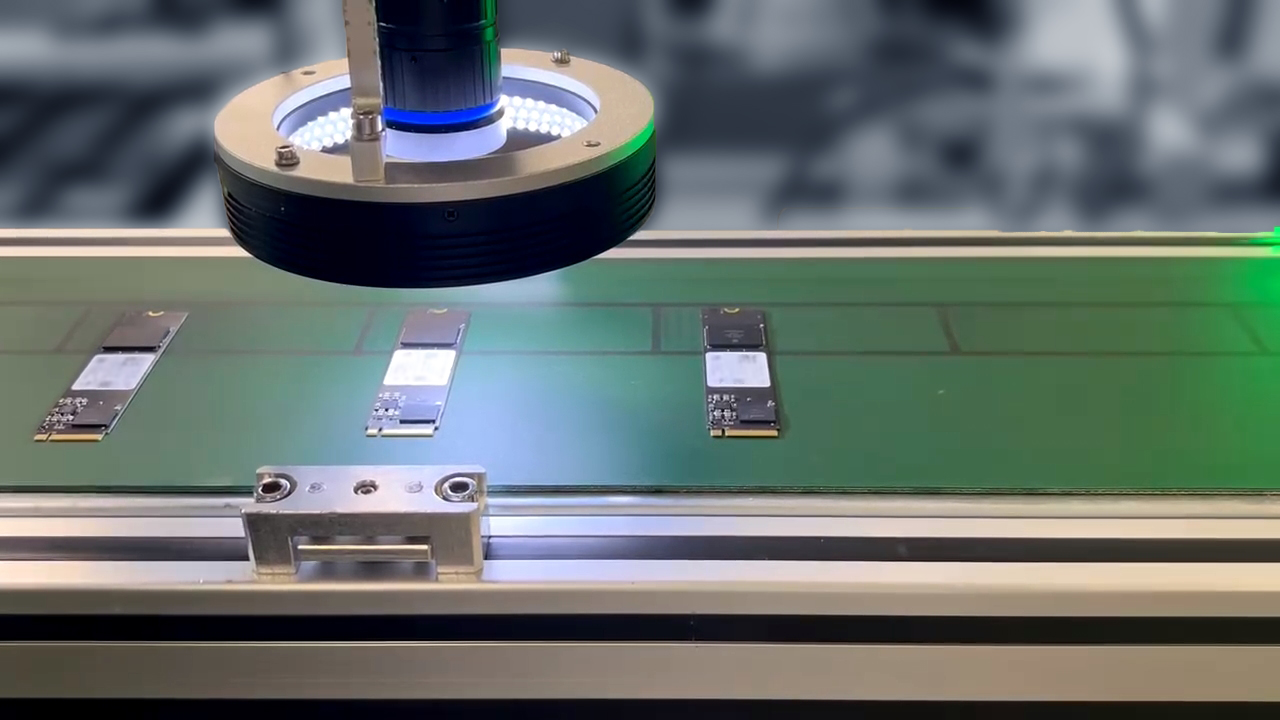
Background and Customer NeedsIn electronics manufacturing, ensuring precise glue dispensing before the PCB enters the soldering machine is crucial for product quality. A customer required an automated inspection system to verify the accuracy of glue application, as defects in dispensing could lead to product failures.After glue is dispensed front dispensing machine, issues such as incomplete application, leakage, or unintended contact with video memory components may occur, requiring inspection. Previously, the inspection relied on manual monitoring, which was prone to human fatigue, inconsistencies, and a lack of traceable inspection data.ChallengesManual Inspection Limitations: Operators needed to constantly monitor the process, increasing the risk of fatigue and misjudgment.High Staff Turnover: Different inspectors applied varying criteria, making standardization difficult.Lack of Traceability: Manual inspection did not allow for image storage or data tracking, complicating production management.Solution & Key TechnologiesTechman Robot’s cobot arm provided an automated inspection solution, integrating advanced vision and AI classification technology to ensure precise glue application detection.Effectively solving the above drawbacks and achieve automated workflow. youtube影片  youtube影片

Case Sharing: FA FVI Damaged Part Detection for PCBs
2025 / 05 / 01

Case Sharing: FA FVI Damaged Part Detection for PCBs

Background and Customer Needs In the fast-paced world of electronics manufacturing, ensuring the quality of products before packaging is critical. A major customer required a solution to detect damaged or missing parts on printed circuit boards (PCBs) with high accuracy and efficiency. Manual inspection methods struggled to keep up with production demands and often overlooked small defects. Challenges Detection of Small Anomalies: Human inspectors found it challenging to consistently identify tiny defects on PCBs. High Volume Production: The need for rapid, scalable inspections to match production cycle times. Labor-Intensive Process: Dependence on manual inspections increased costs and introduced inconsistencies. Solution & Key Technologies Techman Robot’s TM AI Cobot provided a comprehensive automated solution, integrating advanced imaging and AI classification technology. Imaging & Detection The Eye-in-Hand (EIH) camera enabled precise positioning and the external camera enabled multi-point visual inspection, performing image capture from multiple angles to ensure every component was inspected accurately. Images were analyzed using the AI model to classify parts as Pass (OK) or Fail (NG). AI Model Training Leveraged classification AI to train the system with a dataset of 70 images (40 OK, 30 NG). Training time was minimized to just 15 minutes, enabling quick adaptation to changes in production requirements. Automated Workflow OK Products: Automatically directed to the next station. NG Products: Identified and the cobot arm will pick out the defective part to a dedicated cycle area for further process. Results were computed on the AOI Edge and then transmitted to the robot, which executes the decision-making to ensure a seamless production flow.

The Rise of Cobot Automation: Why Collaborative Robots Are the Next Big Thing
2025 / 05 / 01

The Rise of Cobot Automation: Why Collaborative Robots Are the Next Big Thing

Cobot automation is transforming the industrial landscape by introducing a new era of efficiency, flexibility, and collaboration. Unlike traditional robots, which operate in isolation to handle repetitive tasks, collaborative robots, or cobots, are designed to work safely alongside humans. Their seamless integration into human-centric workflows enhances productivity without compromising safety, making them a revolutionary solution in modern automation. As industries strive to boost efficiency, reduce costs, and meet dynamic market demands, cobots are bridging the gap between human ingenuity and machine precision. By redefining industrial workflows, cobot automation is helping businesses adapt to smarter, more agile operations—cementing its role as the next big thing in automation. The Growing Adoption of Cobot Automation The adoption of cobot automation is rapidly accelerating as industries worldwide recognize its transformative potential. Businesses in sectors like manufacturing, logistics, and packaging are increasingly turning to cobots to enhance efficiency and meet rising production demands. Collaborative robots offer the ideal balance between affordability, adaptability, and safety, making them particularly appealing to small-to-medium enterprises (SMEs) looking to embrace automation without overhauling their operations. Global demand for cobots reflects this trend. The collaborative robot market was valued at approximately $1.9 billion in 2024 and is projected to reach $11.8 billion by 2030, growing at a compound annual growth rate (CAGR) of 35.2%. Much of this growth is driven by the increasing adoption of cobots in SMEs, where their ease of use and cost-effectiveness make them a practical alternative to traditional industrial robots. (Data source: Collaborative Robot Market Size, Share, Statistics and Industry Growth Analysis Report by Payload)

Explore by Tags